
Squat
A squash robot, built by thirteen students at Concord Academy for the kids at SquashBusters.

A ball machine fires from one spot. Squat is meant to play like a practice partner: it finds the ball with two cameras, drives into position on four mecanum wheels, and hits it back. When it's finished, we're giving it to SquashBusters.

It watches the ball
Two cameras, sixteen inches apart, film the court at 111 frames a second. A neural network finds the ball in each frame, and the gap between the cameras lets Squat work out how far away it is.
Later, the same cameras will watch the player too, and turn footwork, technique and shot choice into coaching notes.
Testing the camera rig on court.
It moves any way it needs to
Mecanum wheels have angled rollers around the rim. Spin each wheel at a different speed and the robot slides sideways, diagonally, or turns on the spot, without lining up first.
First drive test, April 17, 2026, at 40% speed.
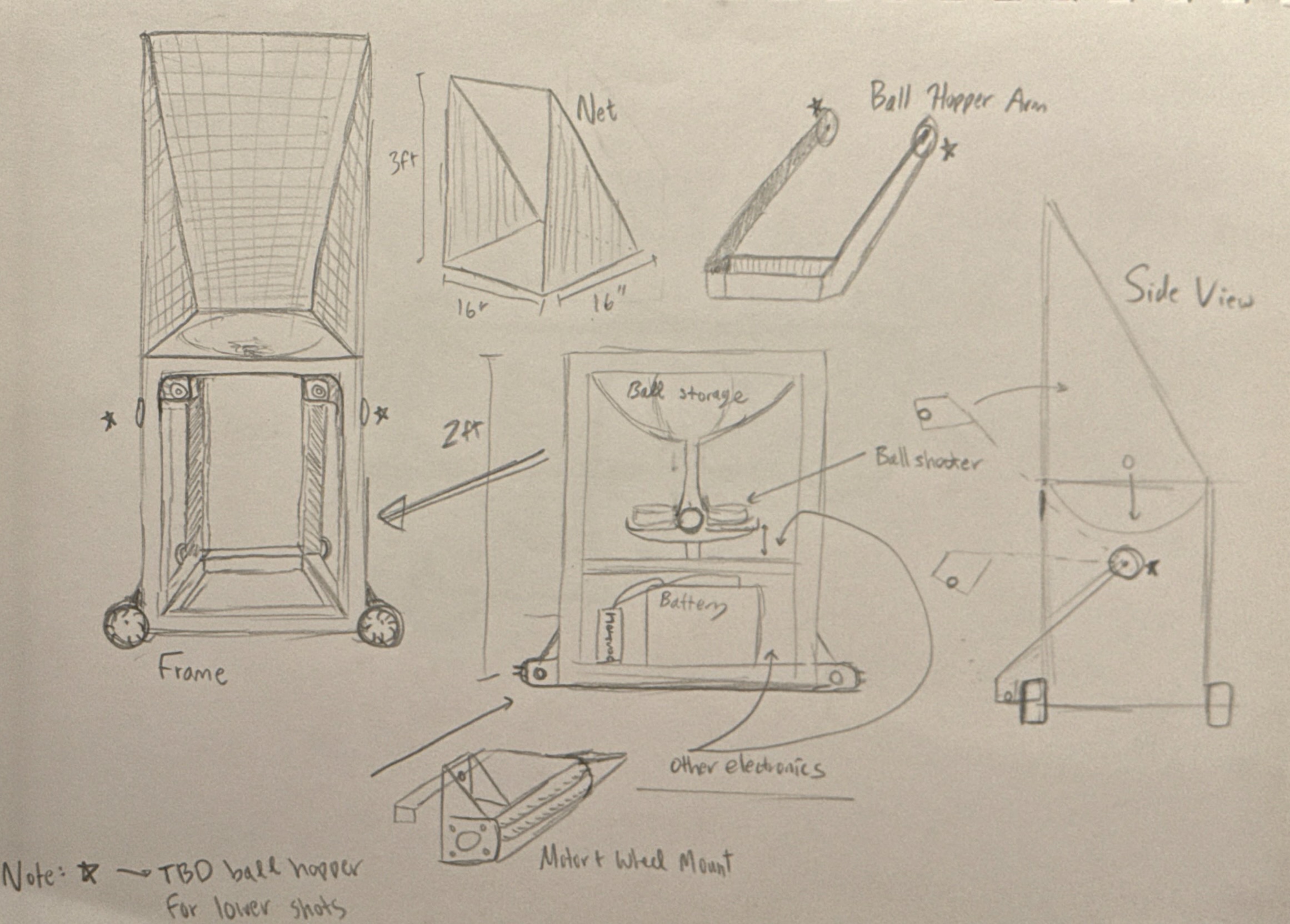
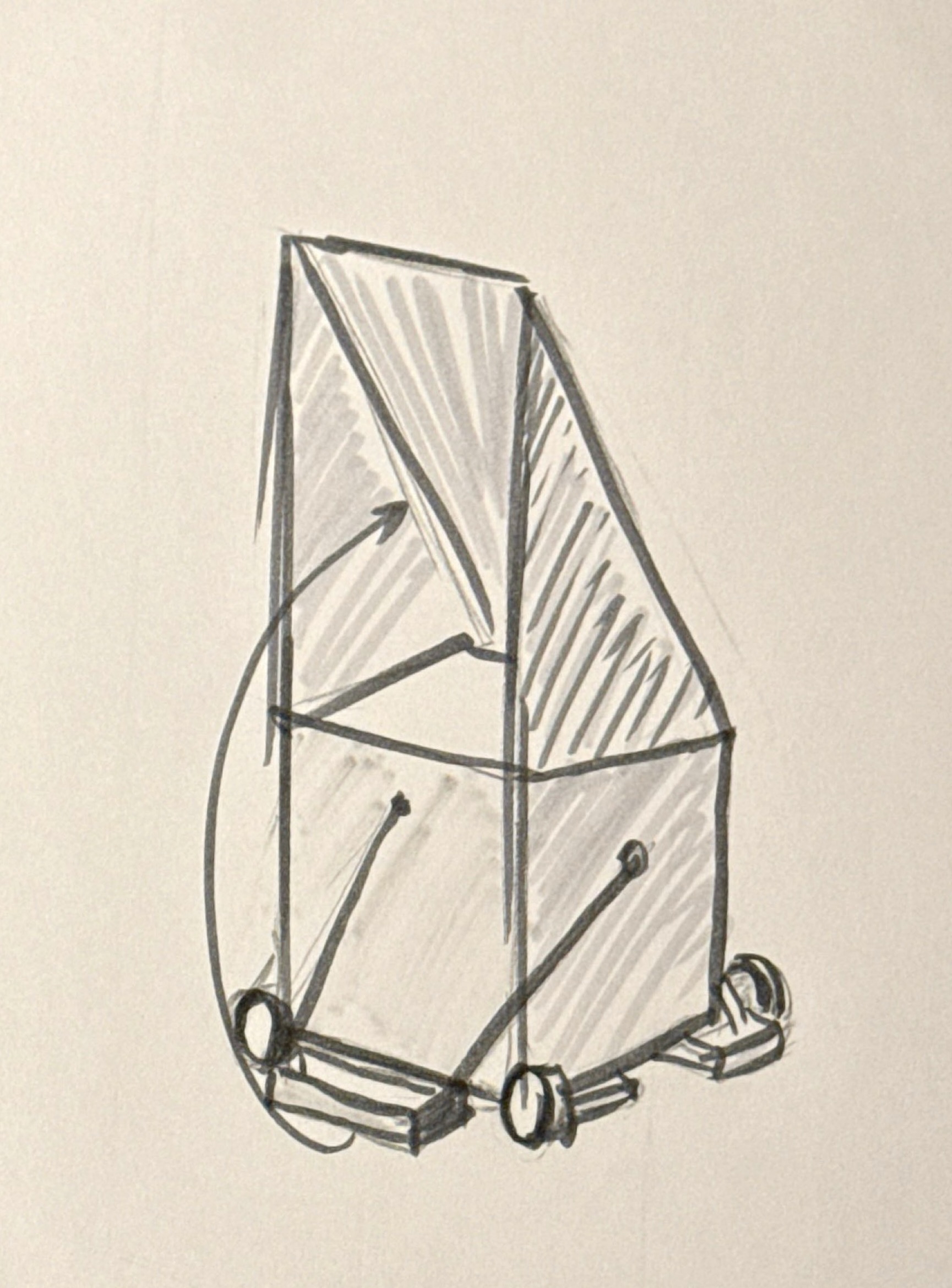
We drew it before we built it
The frame, electronics and software are all our own design. Before building anything, we drew every part by hand, with dimensions, and what the finished robot should look like.
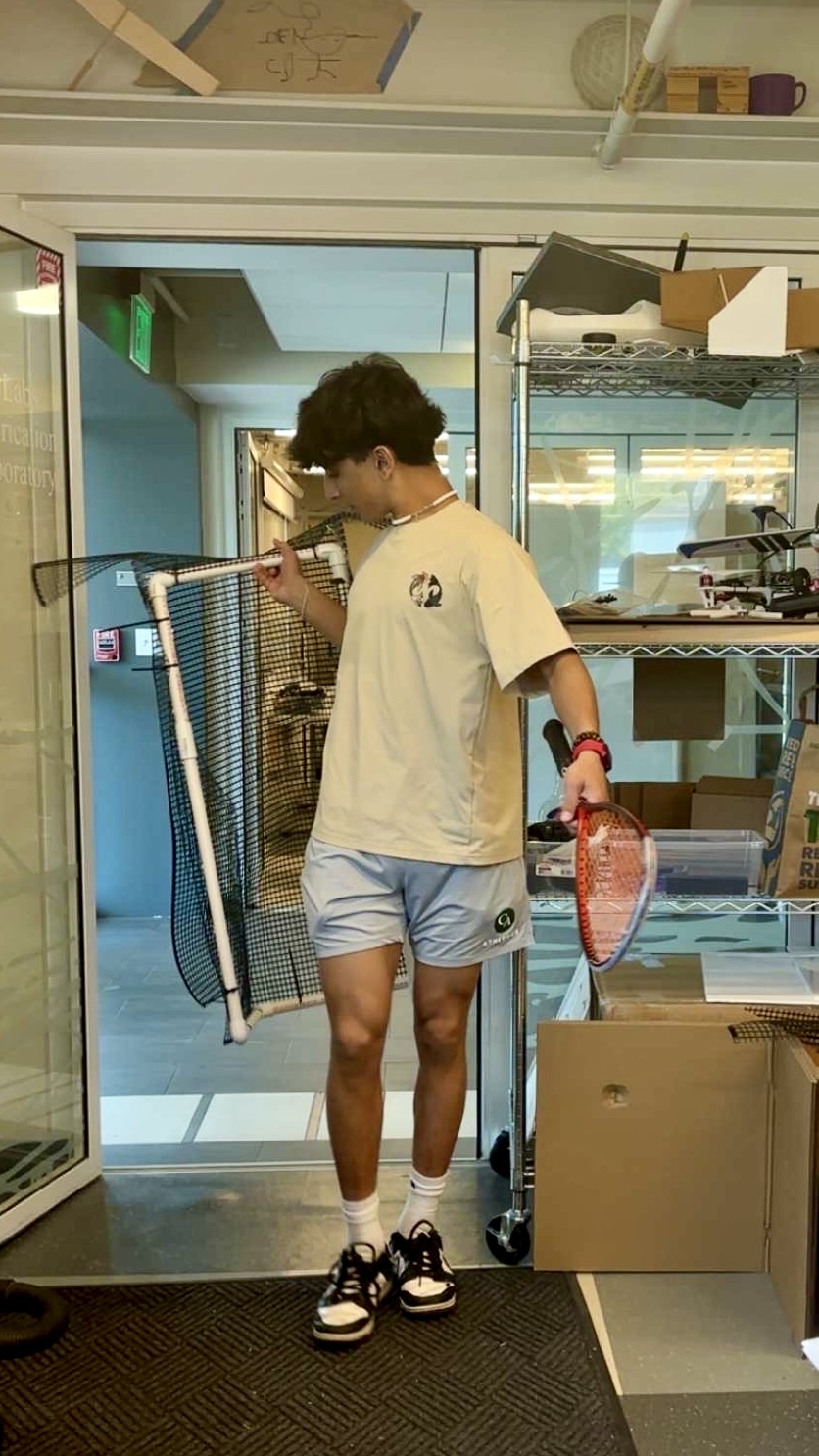
How we got here
Ishaan Mehra starts researching sports robots and squash training.
He pitches it at Concord Academy and the team forms: 13 students across engineering, software and media.
First drive test.
Frame, drive and cameras done, and a first ball-tracking model works. The shooter is still being built.
We take Squat to SquashBusters.
A $2,000 grant from Concord Academy and $600 raised at school paid for the first parts.
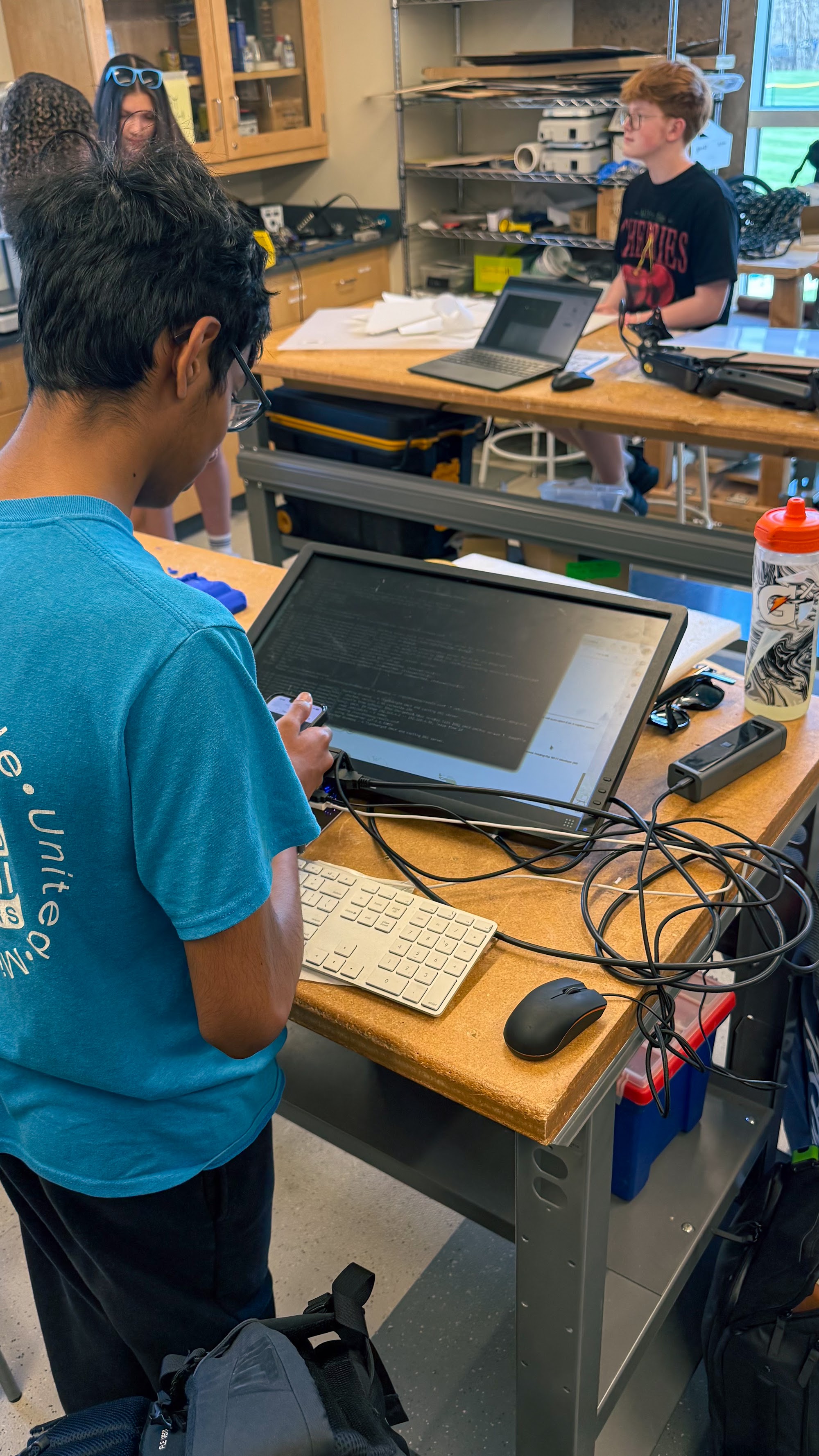
Building the frame, and the software team at work.
It's going to SquashBusters
On August 4 we took Squat to meet the players it's for. We explained how it works, then filmed their session from the robot's point of view. That footage is now training our ball tracker on real rallies.
SquashBusters is a Boston nonprofit that gives young people who wouldn't otherwise have access to squash the courts, coaching and equipment to play. Several of us volunteer there. One-to-one coaching is the most expensive part of learning the game, and a robot can feed a drill for as long as a player wants to keep going. That's why Squat won't be sold.
At SquashBusters, Boston, August 4, 2026.
Help us finish it
We're raising $10,000 to finish Squat and test it at SquashBusters.
In the school paper
- Robotics Club Takes On the Squash Robot Project The Centipede
- Club Spotlight: Robotics Club The Centipede